2.1. Flight Time
Quick Theory
Hover time is the maximum time for stationary flight, calculated using the following formula:
| Symbol | Description | Unit |
|---|---|---|
| Hover Time | minutes | |
| Average Pack Voltage | V (Volts) | |
| Battery Capacity | Ah (Ampere-hours) | |
| Hover Power | W (Watts) |
The Flight Time Calculator offers Beginner, Standard, and Advanced options for users to choose from.
Regardless of the option selected, the flight time calculation results provide the following information:
- Hover Time [min]
- Cruise Time [min]
- Maximum Flight Distance [km]: Assumes no communication range limitations; actual flight distance may be limited by communication equipment
- Battery Capacity [Wh]
- Reliability and Design Risk
2.1.1. Beginner
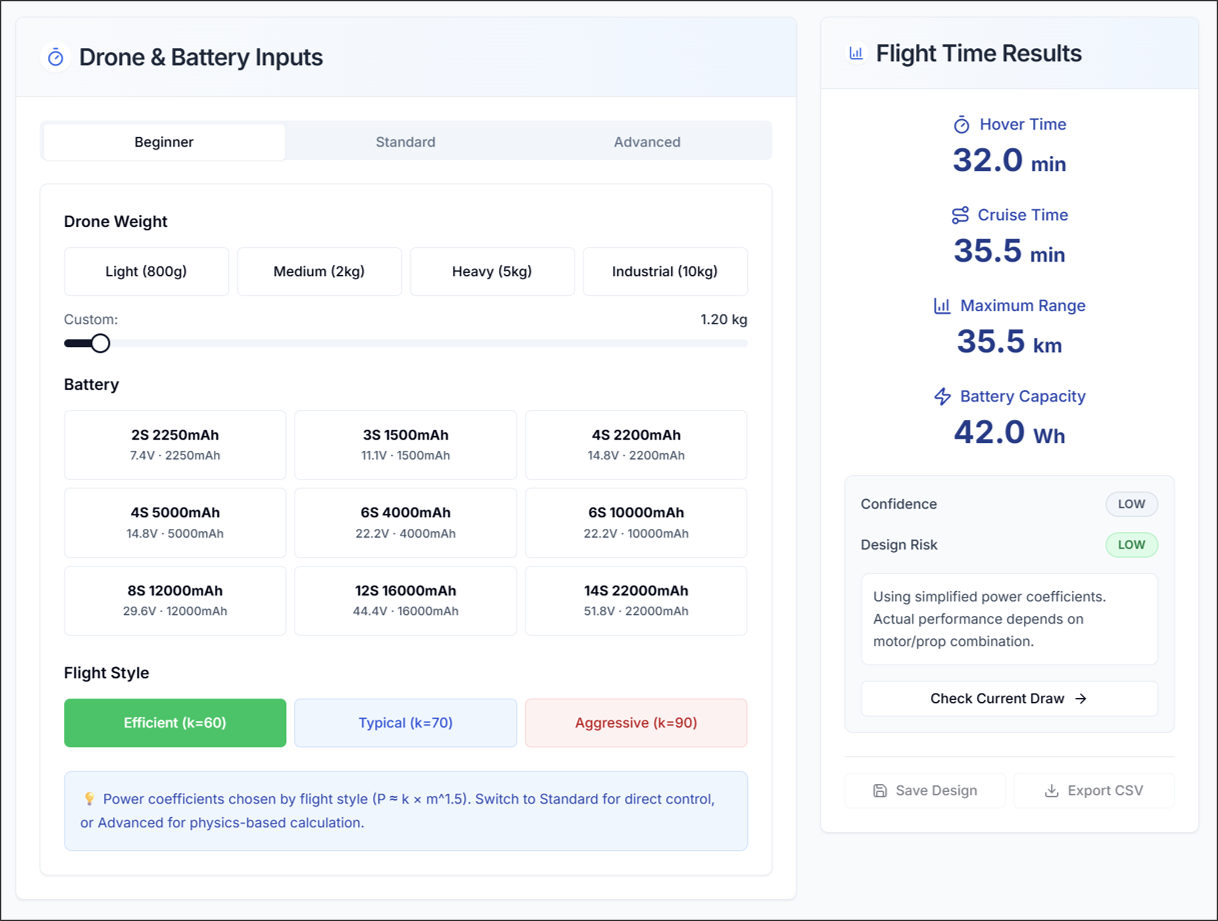
Input Parameters
- Drone Weight
- Battery: Based on Lithium Polymer (Li-Po) battery
- Flight Style: Efficient / Normal / Aggressive
2.1.2. Standard
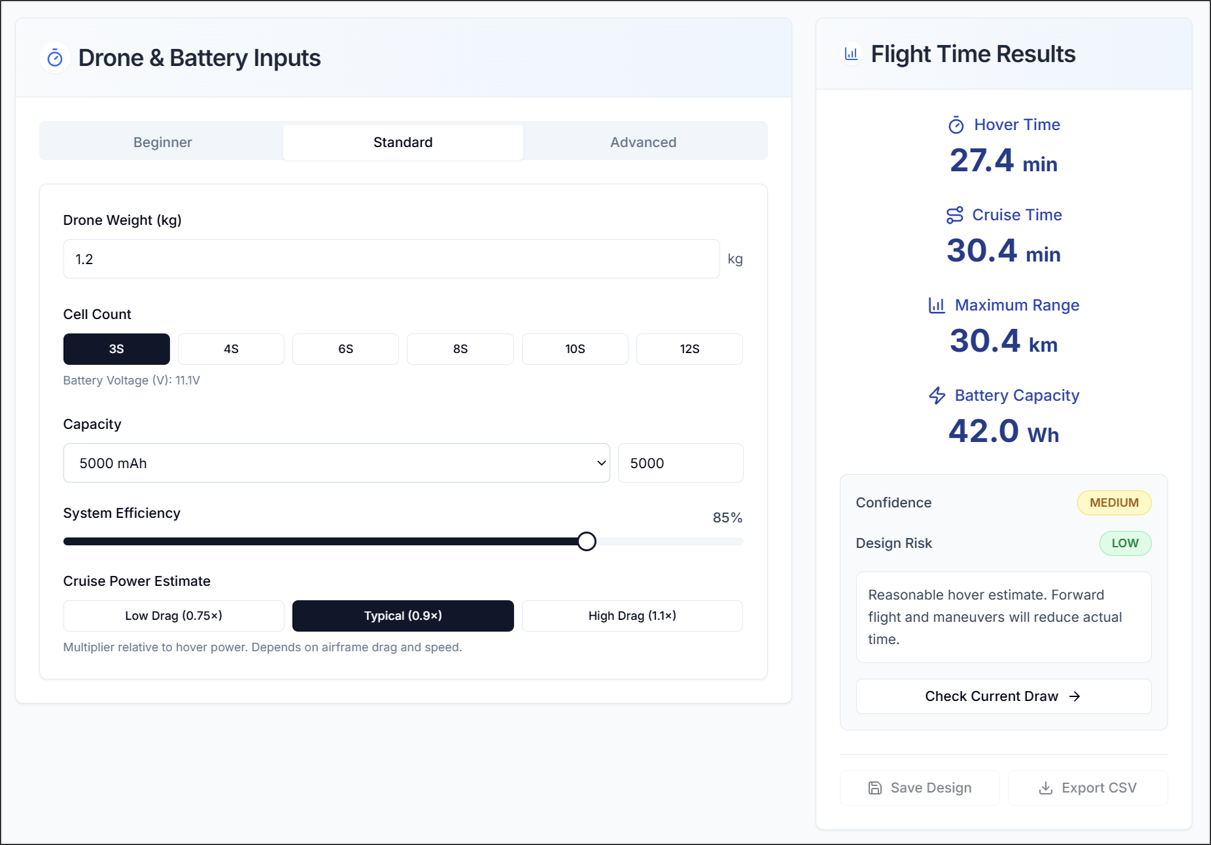
Input Parameters
- Drone Weight (kg)
- Cell Count: Based on Li-Po battery, assuming 3.7V per cell
- Capacity (mAh): Based on Li-Po battery
- System Efficiency
- Cruise Power Estimate
2.1.3. Advanced
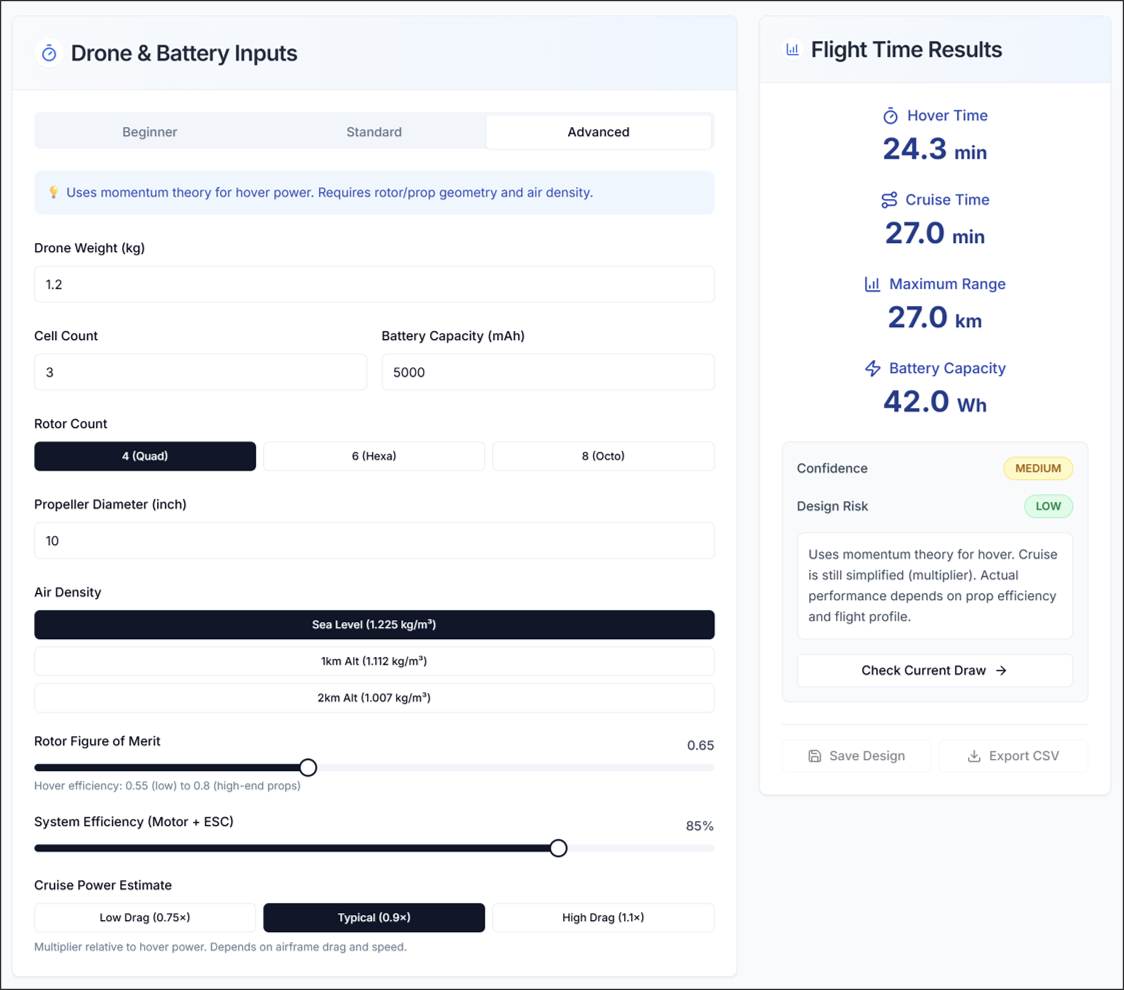
Input Parameters
- Drone Weight (kg)
- Cell Count: Based on Li-Po battery, assuming 3.7V per cell
- Capacity (mAh): Based on Li-Po battery
- Rotor Count
- Rotor Diameter (inch)
- Air Density
- Figure of Merit (FM): Coefficient representing propeller performance efficiency
To learn about propeller performance using CAD, please refer to Advanced Simulation: CFD Analysis.
- System Efficiency
- Cruise Power Estimate
2.1.4. Battery Discharge Graph
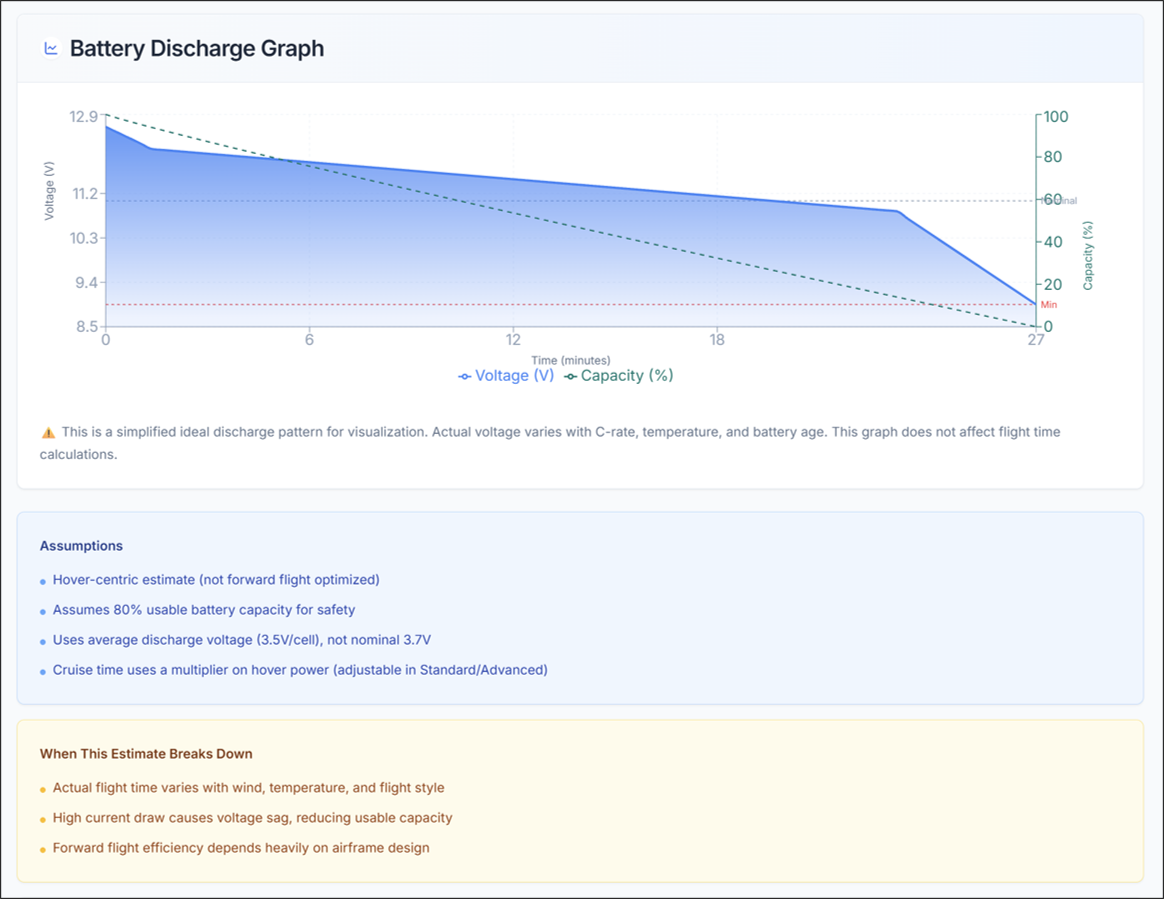
The current calculator assumes Lithium Polymer (Li-Po) battery type for calculations.
Need Assistance or Have Questions?
Frequently Asked Questions: FAQ Link
Support Inquiries: support@everysim.io